
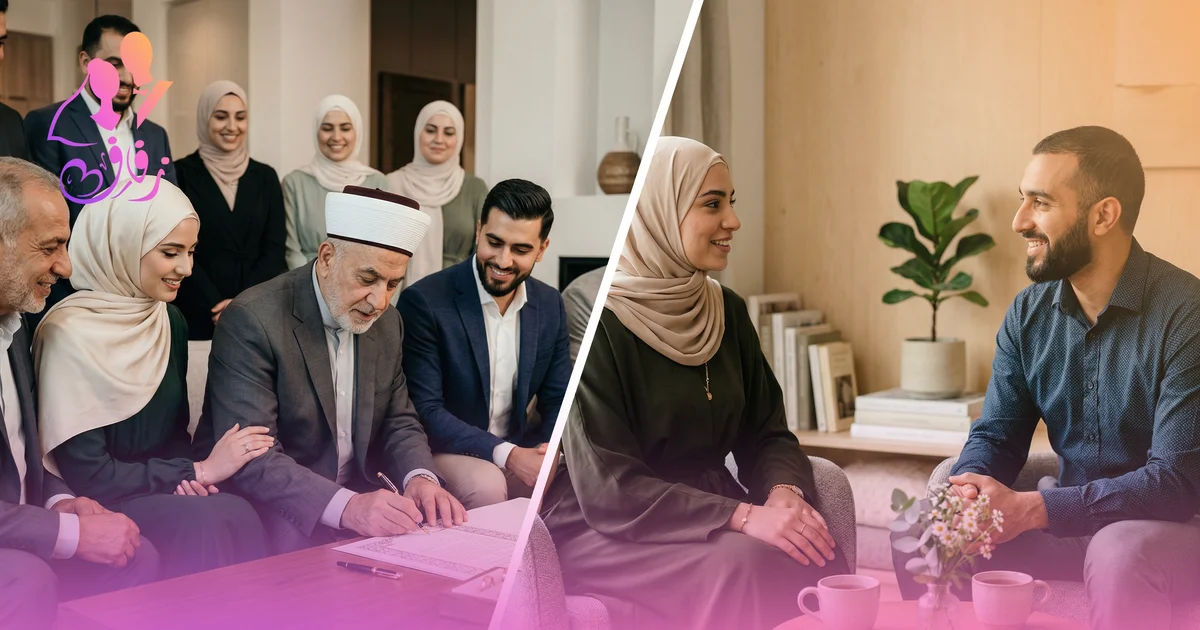
The Core Difference Between Official Engagement and the Nikah Contract
Engagement is a formal promise to marry, while Nikah is the actual legal contract that establishes a marriage. This zefaaf guide clarifies the boundaries of each stage and the religious implications of transitioning from a fiancé to a spouse.
Official engagement and the marriage contract are considered among the most important stages in establishing a stable marital life, yet there is a significant difference between them in terms of legal and religious form, as well as the rights and duties each one creates.
Many people often confuse official engagement, which represents the initial consent between the two parties and documents the relationship legally or socially, with the Islamic marriage contract, which is the final religious agreement between the spouses and defines obligations and rights according to Islamic law.
Understanding this difference helps couples approach the stages of marriage with awareness, ensuring that the relationship is built on sound legal and religious foundations, which reduces conflicts and enhances the stability of marital life.
The Importance of Official Engagement Before the Marriage Contract
Official engagement is an important step before entering into the marriage contract, as it allows both parties to get to know each other better and lay the necessary foundations for married life.
Official engagement provides a period for understanding, discussing priorities, and clarifying expectations, which reduces the likelihood of conflicts after the marriage contract.
It also gives each party the opportunity to assess their capacity for emotional, social, and financial understanding, which enhances the success of the subsequent marriage contract and makes the relationship more stable.
Key importance of official engagement before the marriage contract:
Getting to know the partner’s personality and needs before making a final commitment.
Discussing financial matters and family responsibilities to avoid future surprises.
Building trust and emotional understanding between the two parties.
Setting common goals for married life and planning how to achieve them.
Giving each family the opportunity to understand and approve the relationship.
Reducing psychological pressure after the marriage contract through prior preparation.
Avoiding rushing into a final decision without full awareness of responsibilities.
Thus, official engagement is not merely a formal stage but an essential step to ensure the success of the marriage contract and married life, paving the way for a strong relationship based on understanding and mutual respect.
Advantages of the Islamic Marriage Contract Compared to Official Engagement
The marriage contract represents the final and official stage in establishing the marital relationship, and it surpasses official engagement in religious and legal dimensions.
While official engagement is limited to understanding and closeness between the parties, the marriage contract provides clear guarantees of rights and duties for both the husband and wife, giving the relationship the necessary religious and legal validity for family stability.
Understanding the advantages of the Islamic marriage contract helps recognize its importance and the necessity of adhering to the conditions imposed by Islamic law to ensure a balanced and safe marital life.
Key advantages of the Islamic marriage contract compared to official engagement:
Granting the marriage legal and religious legitimacy, providing official protection for the relationship.
Clearly defining the rights and obligations of both spouses, including financial support and family responsibilities.
Enhancing religious and ethical commitment in interactions between the spouses.
Providing psychological and social stability for the spouses and potential children.
Granting the wife clear legal rights that ensure fairness and equality.
Facilitating future legal matters such as property and inheritance.
Confirming the parties’ intention for a serious and lasting commitment, unlike official engagement, which may be temporary or experimental.
Thus, the marriage contract is not merely a formal step but the cornerstone of a solid marital relationship, complementing official engagement by transforming understanding and closeness into a stable legal and religious relationship.
Benefits of Distinguishing Between Official Engagement and the Marriage Contract
Distinguishing between official engagement and the marriage contract provides couples with greater clarity about each stage in their marital life, reducing the likelihood of misunderstandings or future conflicts.
When both parties understand the difference between the trial phase of official engagement and the legal and religious stage of the marriage contract, they can plan their life more maturely and responsibly, considering the rights and duties of each party.
Key benefits of distinguishing between official engagement and the marriage contract:
Legal and religious clarity: knowing when the relationship becomes officially binding.
Reducing future conflicts: understanding obligations before entering into the religious marriage.
Enhancing trust and understanding: both parties know the limits of each stage and what is expected.
Proper financial and social planning: preparing resources and commitments before the marriage contract.
Providing psychological security for both the wife and husband, which enhances family stability.
Promoting mutual respect: each party respects the other’s obligations and rights at every stage.
In short, distinguishing between official engagement and the marriage contract is not merely a formality but an important step in establishing a balanced and stable marital life, based on full understanding of rights and duties, making the relationship stronger and more successful in the long term.
Summary of the Difference Between Official Engagement and the Marriage Contract
Understanding the difference between official engagement and the marriage contract is essential for anyone planning to build a stable marital life.
Official engagement represents the stage of acquaintance and initial understanding between the parties, providing an opportunity to discuss financial, emotional, and social matters before full commitment.
The marriage contract, on the other hand, is the final religious commitment that grants the relationship official status and defines the rights and obligations of both spouses according to law and Islamic teachings, providing psychological and social stability for all parties.
Key points summarizing the difference between official engagement and the marriage contract:
Official engagement: a period for understanding, getting to know the partner, and building trust before marriage.
Islamic marriage contract: an official step giving the relationship clear legal and religious legitimacy.
Official engagement helps reduce future disputes through prior preparation.
The marriage contract ensures financial and ethical rights for the wife and promotes fairness between the parties.
Transitioning from official engagement to the marriage contract requires full awareness of religious and social conditions.
Avoiding common mistakes at each stage enhances the success and continuity of marriage on sound foundations.
Ultimately, distinguishing between official engagement and the marriage contract and using each stage thoughtfully makes the marital relationship more mature and stable, ensuring that the marriage is based on understanding and mutual respect from the beginning into the future.
ابدأ رحلتك الآن مع منصة زفاف
انضم لآلاف الباحثين عن الزواج الشرعي واعثر على شريك حياتك
سجل الآن مجاناً←