
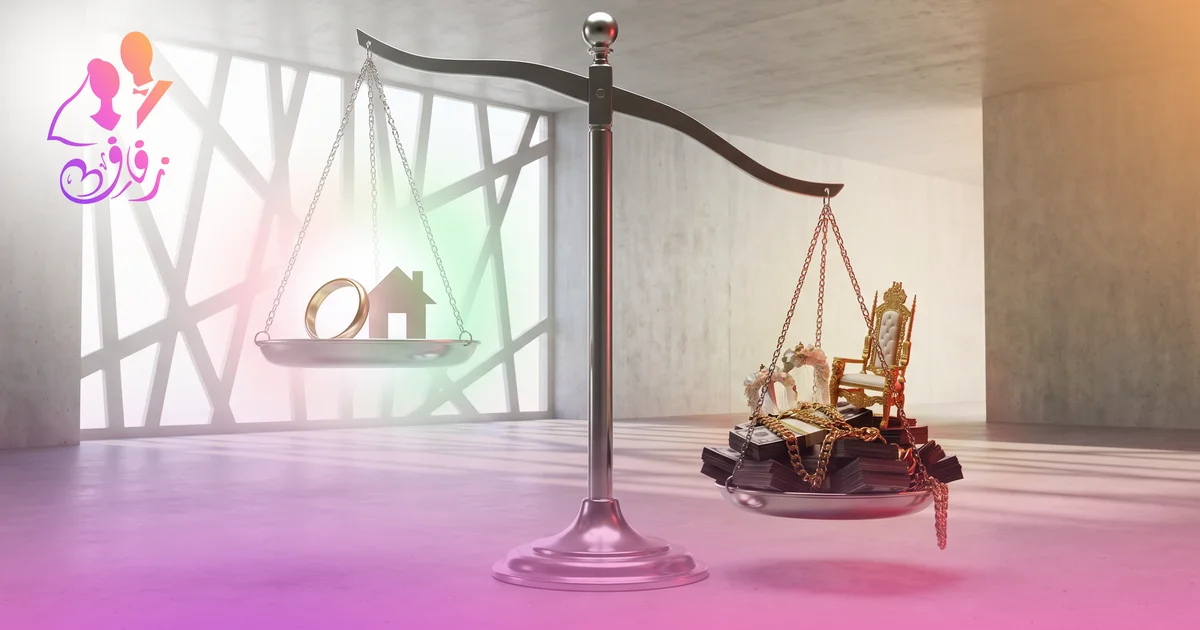
Marriage in Islam: Between Simplicity and Extravagance—Where Do We Stand?
Islam encourages making marriage easy and affordable to protect the youth and build stable families. This zefaaf guide examines the gap between religious values and today's expensive social habits, promoting a return to prophetic simplicity.
The concept of marriage in Islam is considered one of the most profound concepts that combines human values with religious guidance, as it is established as a source of tranquility, affection, and mercy, and is based on ease rather than complexity, and on blessing rather than excessive financial burden.
However, contemporary reality has witnessed a noticeable shift in how marriage is approached, as in many societies it has become associated with social appearances and high financial costs, sometimes drifting away from its true essence.
Discussing marriage in Islam today opens an important space for reflection on the gap between religious guidance that calls for ease and some practices that have turned marriage into a burden rather than a beginning of stability.
This highlights the need to properly understand this concept in a way that balances religious values with social realities and restores marriage to its rightful place as a fundamental pillar in building families and society.
How does Islam view marriage?
An act of worship and a prophetic tradition aimed at purity and stability
A relationship based on affection and mercy between spouses
Built on ease and avoiding unnecessary complexity in costs
Partner selection based on values and character
A means of building a stable family and a cohesive society
Manifestations of exaggeration in marriage and their impact on social reality
When examining the concept of marriage in Islam, it is clear that it is founded on ease and removing hardship, yet in reality, some societies have moved toward excessive costs and appearances, creating a clear gap between religious guidance and practical application.
Many aspects of marriage have come to be measured by the level of spending rather than the quality or stability of the relationship, which has led to delayed marriage among a large segment of young people and increased psychological and financial pressure.
This shift does not reflect the true essence of marriage in Islam, which calls for simplicity and blessing, but rather reflects the influence of accumulated social customs that have become perceived as essential parts of marriage, even though they are not fundamental elements or requirements.
Key forms of exaggeration in marriage:
Unjustified increase in dowries and financial costs
Focus on luxurious ceremonies and celebratory appearances
Social comparisons between families regarding marriage standards
Imposing requirements that exceed the financial capacity of young people
Delaying marriage in pursuit of an idealized standard
Ease in marriage in Islam as a solution to the problem of exaggeration
The concept of marriage in Islam provides a clear framework to address the issue of exaggeration that prevents many young people from marrying at the appropriate time, as it calls for ease, reducing burdens, and making marriage as accessible as possible.
Ease is not merely a social preference but a direct religious directive aimed at protecting society, supporting family stability, and facilitating a path toward purity.
When marriage in Islam is properly understood, it becomes clear that success is not linked to spending or appearances, but to wise partner selection based on values and character, and the ability to build a relationship based on compassion and understanding.
Returning to the principle of ease represents the real solution to the problem of exaggeration, as it restores marriage to its simple and natural form.
Key aspects of ease in marriage in Islam:
Reducing dowries and avoiding excessive demands
Encouraging simple beginnings without unnecessary costs
Focusing on values and character in partner selection
Avoiding unnecessary appearances in celebrations
Simplifying procedures and avoiding complications
Where do we stand today between ease and exaggeration in marriage?
When reflecting on the current reality of marriage in Islam, a clear contrast appears between what religious guidance promotes in terms of simplicity and what has become common in some societies in terms of excessive costs and expectations.
While Islam emphasizes that marriage is a source of tranquility, affection, and mercy, and is based on ease and blessing, it has in some cases turned into a heavy burden requiring significant financial and social preparation, leading to delays in this essential life step.
Understanding today’s reality through the lens of marriage in Islam reveals the urgent need to restore balance so that marriage returns to its true meaning as a relationship based on stability and understanding rather than appearances and comparisons.
Where does this challenge appear today?
A gap between religious guidance and social practices
Increased rates of delayed marriage due to costs
Inflation of the concept of an ideal marriage standard
The influence of social comparisons on marriage decisions
Weak awareness of the principle of ease in some environments
Returning to the correct concept of marriage in Islam as a path to stability
Restoring the correct understanding of marriage in Islam represents a crucial step toward addressing the challenges faced by young people today, especially in light of widespread exaggeration and unrealistic expectations.
Islam provides a clear framework for marriage based on ease and aims to build a stable family grounded in affection and mercy.
When society returns to this foundation, marriage becomes more accessible and realistic, and the pressures that delay it are reduced.
Adhering to the true concept of marriage in Islam also enhances family stability, as it establishes the right foundation for the relationship from the beginning and ensures it is built on values rather than appearances.
How can we return to the correct concept of marriage?
Reviving the principle of ease and reducing costs
Promoting awareness that stability is more important than appearances
Strengthening partner selection based on values and character
Reducing the influence of unnecessary social customs
Understanding marriage as a meaningful commitment rather than a social display
ابدأ رحلتك الآن مع منصة زفاف
انضم لآلاف الباحثين عن الزواج الشرعي واعثر على شريك حياتك
سجل الآن مجاناً←