
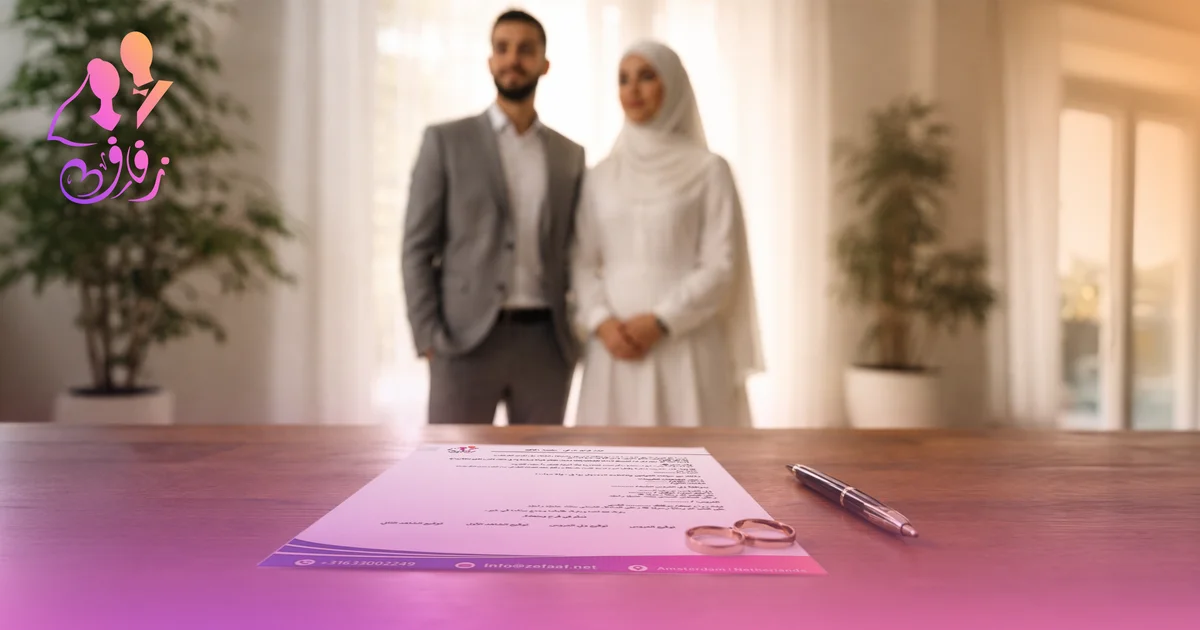
Step-by-Step Guide to Islamic Marriage
Discover the complete step-by-step process of Islamic marriage, from proposal and consent to the Nikah contract. A clear guide covering pillars, conditions, and procedures for a valid and blessed halal marriage.
First, it is important to understand that a legal marriage under Islamic law is the fundamental framework that organizes the marital relationship, ensuring the rights and duties of both partners from the moment the contract is concluded.
To correctly understand the steps of a legal marriage, one must be familiar with its pillars, conditions, and methods of documentation, ensuring family stability and protecting both parties from any future disputes. Find your life partner and begin your journey toward a stable marital life.
Step One: Agreement Between the Parties
The first step in legal marriage begins with an agreement between the man and the woman to marry. This agreement includes the desire of both parties to enter into a marital relationship based on mutual respect and understanding, while considering the suitability of the person in terms of religion, ethics, and ability to bear family responsibilities.
This agreement forms the foundation of the legal process and must stem from free will without any pressure or coercion. Start searching for a life partner who shares your values and future goals.
Step Two: Conditions and Pillars of Legal Marriage
For a marriage to be legally valid under Islamic law, a set of essential conditions and pillars must be fulfilled:
Full consent of both parties: Marriage is not valid without the clear and explicit desire of both the man and the woman.
Guardian of the woman (Wali): A guardian must be present for the woman if she is an adult, to protect her rights.
Mahr (Dowry): The husband must provide a dowry to the wife, which is her right and formalizes the contract.
Offer and acceptance (Ijab and Qabul): This step is carried out in the presence of two just witnesses, where the man offers the marriage (Ijab) and the woman accepts it (Qabul).
Fulfilling these pillars ensures that the contract is valid according to Sharia law and guarantees the rights of each party. Explore ways to apply for a legal marriage and start your journey with your ideal life partner.
Step Three: Documenting the Marriage Contract
After completing the pillars and conditions, the next stage is to formally document the marriage contract, which includes:
Registering the contract in court or the Real Estate Registry: This ensures the legal rights of both parties.
Documenting the witnesses: Witnesses must be officially present to confirm the authenticity of the contract.
Obtaining the official marriage certificate: This legally proves the relationship and serves as both a Sharia and legal reference for any future matters.
Documenting the marriage preserves the rights of the spouses and provides full legal protection, establishing the relationship on correct and safe foundations. Officially document your marriage and start your married life safely and confidently with your partner.
Step Four: Choosing Suitable Witnesses
The presence of witnesses in the marriage contract is not merely a formal procedure; it is a key pillar to ensure the validity of the contract legally and religiously. Witnesses must be just and adults, capable of giving clear and truthful testimony. It is preferable that they are relatives or trustworthy people to guarantee the credibility of the contract. Choose your witnesses carefully to confirm the validity of your marriage contract and start your married life with confidence.
Step Five: Determining and Documenting the Dowry
The dowry is a right of the wife and reflects the husband’s respect and commitment toward her. It may be monetary or in-kind, and it is preferable to document it in writing during the contract to avoid any future disputes. Clarifying the dowry also strengthens the stability of the relationship and demonstrates the seriousness and commitment of both parties. Provide an appropriate dowry for your life partner and start a relationship based on respect and commitment.
Step Six: Organizing the Marriage Ceremony
After completing and documenting the contract, a marriage ceremony can be organized in accordance with customs and traditions, ensuring compliance with Islamic law. This stage strengthens social ties, brings joy to both partners and their families, and leaves a positive impression on the beginning of their shared life. Plan your wedding ceremony in a way that combines both religious and social aspects, and begin a happy married life.
Step Seven: Registering the Marriage with Official Authorities
After completing the legal contract, it is recommended for the couple to register the marriage with the relevant government authorities, such as the Real Estate Registry or Civil Registry offices, to ensure legal recognition of the relationship. This registration facilitates any future procedures, such as obtaining a marriage card or registering children. Make sure to officially register your marriage to protect your rights and those of your spouse.
Step Eight: Understanding the Rights and Duties of Spouses
Legal marriage is not limited to the contract and documentation only; it also includes a set of mutual rights and duties:
Financial rights: Such as alimony and dowry.
Family rights: Such as mutual respect and cooperation in managing family affairs.
Sharia duties: Such as kind treatment, affection, and mercy between the spouses.
Understanding these rights and duties helps build a healthy and stable marital relationship. Know your rights and duties to establish a marriage based on respect and affection.
Step Nine: Continuous Communication and Understanding
After marriage, effective communication and understanding remain among the most important foundations for a successful relationship. Couples should exchange open and respectful dialogue and address any problems or disagreements calmly and constructively to ensure family stability and the happiness of both parties. Maintain communication with your life partner to build a strong and lasting relationship.
Step Ten: Respecting Privacy and Personal Space
Respecting each other’s privacy is one of the most important factors for marital stability. Couples should grant each other personal freedom within the limits of mutual respect. This helps strengthen the relationship and reduces potential tension or conflicts. Maintain a balance between closeness and personal freedom with your partner to build a healthy and stable relationship.
Step Eleven: Participating in Decision-Making
Success in married life depends on cooperation and participation in family decision-making, whether financial, life-related, or concerning children. This approach enhances trust between spouses and ensures that every decision is made jointly with understanding and respect. Share decisions with your life partner to strengthen understanding and reinforce the marital relationship.
Step Twelve: Patience and Forgiveness
Every marriage faces challenges and disagreements. Patience and forgiveness for small mistakes, along with the ability to resolve conflicts calmly, are the keys to maintaining a healthy and stable relationship. Adopt patience and forgiveness with your life partner to live a happy and stable married life.
Step Thirteen: Maintaining Love and Affection
A successful marriage is based on respect, love, and daily affection between spouses. This can be achieved through kind words, shared attention, and small moments that enhance emotional closeness. Make sure to show love and affection daily to strengthen the stability and happiness of your married life.
Påbörja din resa nu med Zeffaf
Gå med tusentals som söker värdebaserade äktenskap och hitta din livspartner
Registrera dig gratis←