
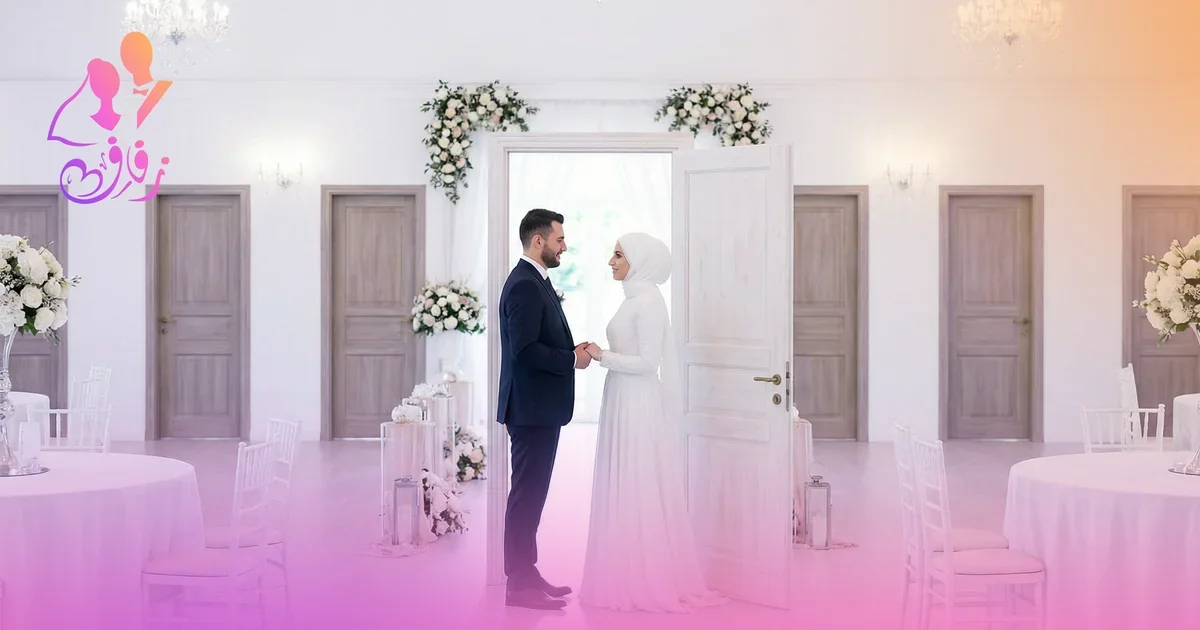
Valid Islamic Marriage (Nikah) and Its Types
This article explores the fundamental pillars of a legally binding marriage according to Islamic jurisprudence. It also provides a detailed overview of the various forms of marital unions recognized under Sharia law.
Marriage has many forms, yet there is disagreement regarding the legitimacy of some of them in Islam—from misyar marriage to customary (‘urfi) marriage, shighar marriage, marriage to a woman from the People of the Book, and others.
What are these types? Why was shighar marriage compared to the mating of dogs? Is there more than one valid form of marriage? If so, what are its rulings and conditions? Most importantly: how can a poor man get married? And why did Allah legislate marriage in the first place—even for the poor?
In this article, the “zefaaf” platform takes you on a journey into the world of Islamic marriage and explains how to ensure that you are on the right path.
Why Did Allah Legislate Marriage?
The Enjoyment of This World
Marriage is one of the pleasures of worldly life, and the best pleasure of this world is a righteous wife. Muslim narrated from ‘Abdullah ibn ‘Amr that the Messenger of Allah ﷺ said:
“This world is provision, and the best provision of it is a righteous woman.”
Affection and Tranquility
This is the primary objective mentioned in the Noble Qur’an. A human being needs a partner to share joys and sorrows and to find peace with. Allah says:
“And among His signs is that He created for you spouses from among yourselves that you may find tranquility in them; and He placed between you affection and mercy.” (Qur’an 30:21)
Chastity and Protection of Honor
Marriage is the only lawful means of fulfilling natural human desires, protecting young men and women from immorality and achieving psychological stability.
The Prophet ﷺ said:
“O young people, whoever among you can afford it, let him marry, for it lowers the gaze and guards chastity.”
Building the Earth
Marriage leads to righteous offspring who worship Allah and continue the cultivation of the earth. The Prophet ﷺ said:
“Marry the loving and fertile woman, for I will boast of your great numbers before the nations on the Day of Judgment.”
Establishing the Family
The family is the foundational unit of society. Through marriage, a safe and stable environment is created to raise children upon moral and ethical values, producing a balanced generation that benefits itself and its nation.
Preserving Lineage and Inheritance Rights
Without marriage, lineage would be lost and rights confused. Marriage clearly establishes parentage and determines rulings of inheritance, maintenance, and guardianship—ensuring social cohesion.
These are the most important reasons for marriage in Islam. They form the foundation for anyone seeking lawful marriage and for anyone facilitating it—whether an individual, a family, or an electronic platform such as the Islamic marriage and matchmaking application “zefaaf.”
What Are the Pillars and Conditions of Marriage in Islam?
The Three Pillars of Marriage in Islam:
The absence of any legal impediments preventing the marriage (e.g., a Muslim woman marrying a non-Muslim man).
The offer (ijab): the statement made by the guardian (wali) or his representative to the groom, such as “I marry you to my daughter…”
The acceptance (qabul): the statement made by the groom or his representative, such as “I accept.”
The Four Conditions of Marriage in Islam:
Both spouses must be specifically identified by name or description, and each must consent to the other.
The presence of a guardian (wali) is required. The guardian must be sane, mature, free, male, upright in character, and of the same religion (a non-Muslim has no guardianship over a Muslim).
The presence of witnesses, based on the Prophet’s statement:
“There is no marriage except with a guardian and two witnesses.”
Are There Different Types of Marriage in Islam?
There are more than ten forms of marriage mentioned in jurisprudence; some are prohibited and others disputed among scholars.
Valid Islamic Marriage
This is the form discussed above, fulfilling all conditions (guardian, witnesses) and pillars (offer and acceptance).
Customary (‘Urfi) Marriage
A marriage that does not fulfill the required pillars and conditions. It is impermissible. Public declaration is essential in marriage.
Mut‘ah (Temporary) Marriage
Temporary marriage is prohibited and invalid according to the consensus of Ahl al-Sunnah. It was forbidden by the Prophet ﷺ on the Day of Khaybar.
Shighar Marriage
Shighar marriage occurs when a man marries his daughter to another man in exchange for that man marrying his daughter or sister to him—without dowry. It was named shighar due to its ugliness, likened to a dog lifting its leg to urinate. In Arabic, “shaghara al-kalb” means “the dog raised its leg to urinate.”
Tahleel Marriage
This refers to marrying a woman who has been divorced three times in order to make her lawful again for her first husband, without genuine marital intention. Such a marriage is invalid because permanence is a condition of validity.
Misyar Marriage
A man contracts a valid marriage fulfilling all pillars and conditions (consent, guardian, witnesses, dowry), but the woman willingly waives certain rights, such as maintenance or housing. She remains in her family home, and the husband visits according to circumstances.
On the “zefaaf” platform, no marriage is conducted without fulfilling the three pillars and all required conditions. Families are involved from the beginning of the acquaintance process until marriage.
What Is the Ruling on a Muslim Man Marrying a Woman from the People of the Book?
Islamic law permits a Muslim man to marry a chaste woman from the People of the Book (Christian or Jewish), under ethical and legal guidelines ensuring family stability. Allah says:
“Today all good things have been made lawful for you… and chaste women from among the believers and chaste women from among those who were given the Scripture before you, when you give them their dowries…” (Qur’an 5:5)
Legal Guidelines:
Chastity: She must be morally upright.
Preference: Most scholars state it is preferable to marry a Muslim woman to avoid potential challenges in raising children.
Educational balance: This option should be taken only when there is clear benefit, to ensure children grow in a strong Islamic environment.
Finally, How Can a Poor Young Man Get Married?
You must believe that marriage is one of the doors of sustenance, as Allah says:
“If they are poor, Allah will enrich them from His bounty.”
Islam even encourages the poor to marry:
“Marry off the single among you… If they are poor, Allah will enrich them from His bounty.” (Qur’an 24:32)
The Prophet ﷺ said:
“Three are entitled to Allah’s help: the one striving in Allah’s cause, the slave seeking emancipation, and the one who marries seeking chastity.”
This implies that lawful marriage is a remedy for poverty at its root.
Yes, there are many real cases today. The Prophet ﷺ said:
“The most blessed women are those easiest in dowry.”
Many couples on the “zefaaf” app married without wealth, but they relied upon Allah and He enriched them.
Zefaaf Platform… Our Social Responsibility
Facilitating marriage is a major social responsibility. It protects society and spreads chastity and affection.
The “zefaaf” Islamic marriage platform aims to provide a modern technological alternative committed to authentic Islamic values.
What Does zefaaf Offer?
Trusted Islamic Environment: Dedicated exclusively to lawful marriage.
Privacy and Global Security: Transparent experience preserving privacy worldwide.
Continuous Guidance: 24/7 support and practical advice.
Strict Sharia Policy: Managed by committed Muslims ensuring ethical compliance.
How to Benefit Fully from the Application
First: Build an Honest Profile
Be clear and transparent about your education, profession, and intentions.
Second: Use Smart Search Tools
Apply advanced filters (location, age compatibility, religious values).
Third: Communicate Wisely and Safely
Keep conversations within the platform and maintain respectful conduct.
Fourth: Learn from Expert Guidance
Utilize educational content about Islamic engagement etiquette.
Fifth: Comprehensive Evaluation Before Formal Engagement
Ensure emotional, cultural, and religious harmony before proceeding.
Marriage in Islam Is More Than a Contract
Marriage in Islam is not merely a contract—it is a journey toward tranquility, chastity, and cultivating the earth.
It begins with offer and acceptance, the guardian and witnesses. While forms vary, any type based on timing or exchange without dowry (such as shighar) is invalid.
Poverty has never been an obstacle; rather, it is a door to sustenance. Blessing lies in simplicity, and sincerity is the true currency for building a secure home.
Begin Your Journey Toward the Lawful Path Now
Download the “zefaaf” application and join thousands seeking a life partner in a secure environment committed to Islamic values.
Frequently Asked Questions
Why does Islam encourage marriage?
To achieve tranquility and affection, preserve chastity, build a righteous family, and protect lineage.
What are the basic pillars and conditions of valid Islamic marriage?
Offer and acceptance with no impediments; conditions include identification and consent of both spouses, presence of guardian, and witnesses.
Is it permissible for a Muslim man to marry a Christian or Jewish woman?
Yes, if she is chaste, though marrying a Muslim woman is preferable for religious stability in child upbringing.
How can a poor young man marry?
Through reliance on Allah and sincere effort. Allah promises assistance to the one who marries seeking chastity.
What distinguishes the “zefaaf” platform?
A secure environment committed to strict Sharia guidelines, preventing casual relationships and using AI to ensure compatibility.
Start Your Journey Now with Zefaaf Platform
Join thousands seeking halal marriage and find your life partner
Register Now for Free←